Showing posts with label samuel ramey. Show all posts

Thursday, March 28, 2019

Birthday Interview with Samuel Ramey

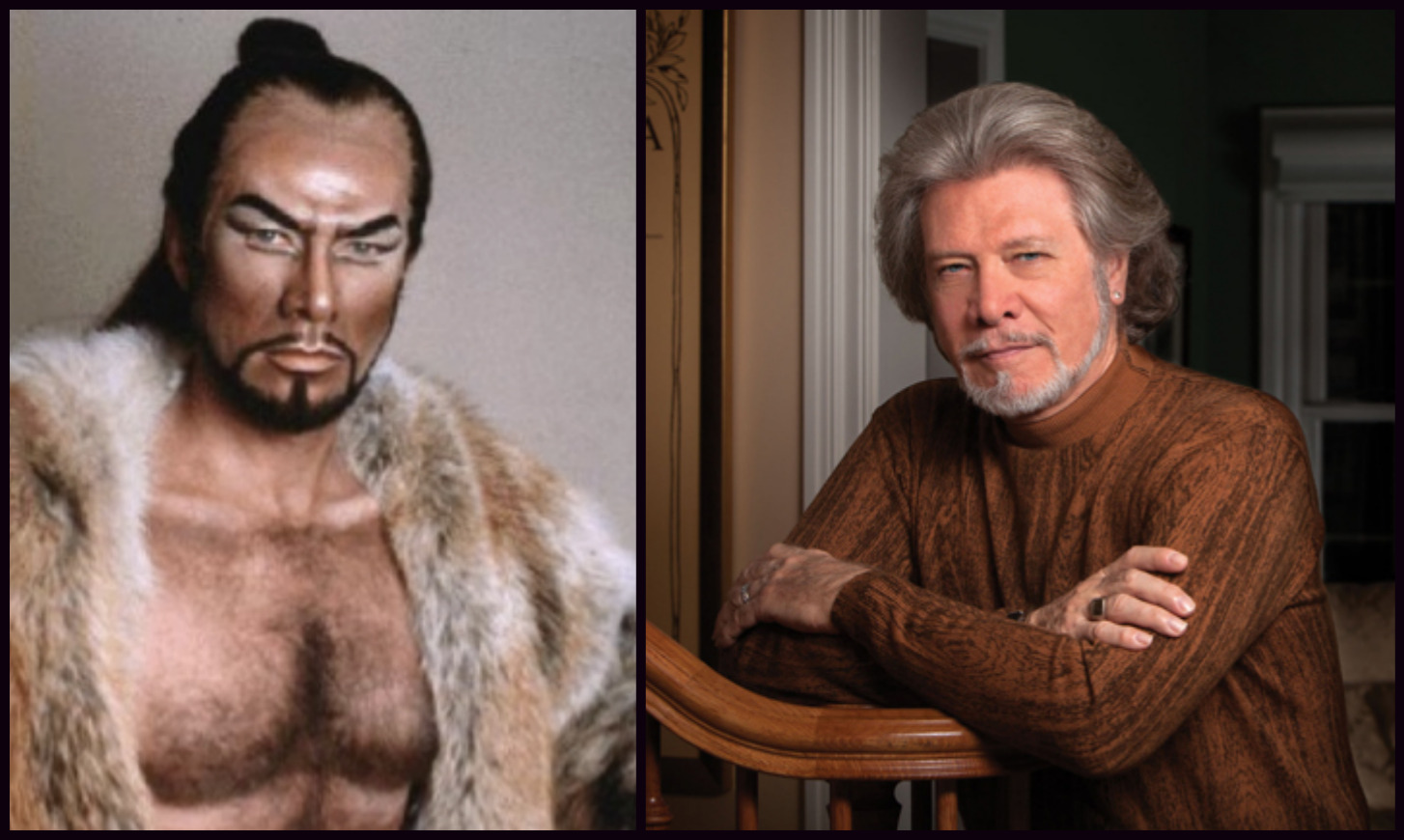
Samuel Ramey as Attila (left)
He has been referred to as the original barihunk by some, for leading the way in sexy portrayals of the low voice repertory. His video of Boito's Mefistofele from the San Francisco Opera has become a cult classic with opera aficionados. He continued his sexy shirtless portrayals as Attila that were not only sexy, but set the vocal standard to this day.

His amazing vocal flexibility and range has allowed his to sing roles ranging from Argante in Handel’s Rinaldo to the title role in Bartok’s Bluebeard’s Castle. His repertoire includes the florid pasages of Handel, the bel canto roles of Bellini and Donizetti, the great baritone roles of Verdi and Puccini, great American operas and even many of the great Russian and French bass roles.

Rather than post our annual birthday tribute, we asked the legendary bass to answer a few questions for readers.

1. You were considered a "barihunk" before Francesca Zambello coined the phrase, singing both Attila and Mefistofele shirtless.  Did you ever imagine that baritones and basses would become the sex symbols of opera? 

Ramey: Generally speaking, most baritones and basses are "sexier" than most tenors.  So I can‘t say I‘m surprised.

2. You're now singing two comprimario roles at the Dallas Opera. What draws you to the stage when most singers are enjoying retirement? 

Ramey: I feel that I still have something to offer as a performer and I still love being on the stage.  I‘ve been trying to reinvent myself but it‘s not easy.  I appreciate the Dallas Opéra for giving me this opportunity.


3. Your Attila and Mefistofele are considered definitive interpretations by most opera aficionados. Were these your favorite roles. Which other roles did you love?

Ramey: Attila and Mefistofele were certainly two of my favorite roles, but I have quite a few favorites.  Others would be Mephistopheles in Faust and Damnation de Faust, Mozart‘s Figaro and Don Giovanni, Nick Shadow in Rake's Progress, Filippo II in Don Carlo, Bertram in Robert le Diable, Boris Godunov.

4. What role did you never get to sing that you would have loved to perform? 

Ramey: I‘ve always loved the early Verdi operas.  One I always hoped to sing was Silva in Ernani, but the opportunity never presented itself.

5. Karita Mattila just posted on our Twitter feed that Placido Domingo was her best stage kiss. Who was yours?

Ramey: I didn‘t have many stage kiss opportunities but I‘d have to say that my best stage kiss was Marie McLaughlin.


Thursday, November 8, 2018

Christian Van Horn only ninth bass to get devilish at The Met

Christian van Horn as Mefistofele (courtesy of the Metroploitan Opera)
On November 8, 2018, Christian Van Horn will become just the ninth bass to sing the title role in Boito's Mefistofele at the Metropolitan Opera. He was preceded by some of the great singers of the last two centuries,  including Giovanni Mirabella who sang the role in 1883,  followed by Eduard de Reszke, Pol Plançcn, Fyodor Chaliapin, Adamo Didur, José Mardones, Dean Peterson and most famously Samuel Ramey.

Samuel Ramey sings "Ecco il monde" from Mefistofele:

The Robert Carsen production will feature an all-star cast that also includes tenor Michael Fabiano as Faust and soprano Angela Meade as Margherita. Mefistofele is the only completed opera by Arrigo Boito, who is best remembered for writing Verdi's librettos for Otello and Falstaff.  The composer was working on his opera Nerone when he died in 1918. The great conductor Arturo Toscanini led a three person team in completing the opera, which finally premiered posthumously in 1924.

Performances of Mefistofele will run through December 1st and tickets are available online.

This will be the opera's first performance at The Met since 2000. Of the 67 performances of Mefistofele, all but 13 came before 1927. Much of the recent interest in the opera is because of Samuel Ramey's devilishly sexy performances at the San Francisco Opera, which were captured on video.

Monday, October 9, 2017

HAPPY BIRTHDAY: GIUSEPPE VERDI October 9, 1813 - January 27, 1901

Giuseppe Verdi
Today is composer Giuseppe Verdi's birthday (although some list it as October 10th). His characters have been a treasure trove for us at Barihunks, with a number of roles becoming classic barihunk roles, like Attila, Ezio, Iago, Scarpia, Rodrigo, Giorgio Germont and Ford. Some of the great Verdi baritones who have been on this site include Ettore Bastianini, Titta Ruffo, Sherrill Milnes, Leonard Warren, Ferruccio Furlanetto and Dimitri Hvorostovsky.

Since his actual birth date is in dispute, we're celebrating his birthday for 48 hours! 

Giuseppe Fortunino Francesco Verdi was born in Roncole in the former duchy of Parma, he first studied music in the neighboring town of Busseto. Then, upon being rejected in 1832, because of his age, by the Milan Conservatory, he became a pupil of the Milanese composer Vincenzo Lavigna. He returned to Busseto in 1833 as conductor of the Philharmonic Society.

Samuel Ramey in the Attila-Ezio duet from San Francisco Opera:

At the age of 25 Verdi again went to Milan. His first opera, Oberto, was produced at La Scala with some success in 1839. His next work, the comic opera Un giorno di regno (King for a Day, 1840), was a failure, and Verdi, lamenting also the recent deaths of his wife and two children, decided to give up composing. After more than a year, however, the director of La Scala succeeded in inducing him to write Nabucco (1842). The opera created a sensation; its subject matter dealt with the Babylonian captivity of the Jews, and the Italian public regarded it as a symbol of the struggle against Austrian rule in northern Italy. I Lombardi (1843) and Ernani (1844), both great successes, followed, but of the next ten productions only Macbeth (1847) and Luisa Miller (1849) have survived in the permanent operatic repertory. Verdi's three following works, Rigoletto (1851), Il Trovatore (1853), and La Traviata (1853), brought him international fame and remain among the most popular of all operas.

Operas written in the middle of Verdi's career, including Un ballo in maschera (A Masked Ball, 1859), La forza del destino (The Force of Destiny, 1862), and Don Carlo (1867), exhibit a greater mastery of musical characterization and a greater emphasis on the role of the orchestra than his earlier works. Aïda (1871), also of this period and probably Verdi's most popular opera, was commissioned by the khedive of Egypt to celebrate the opening of the Suez Canal; it was first performed in Cairo. Three years later, Verdi composed his most important non-operatic work, the Requiem Mass in memory of the Italian novelist Alessandro Manzoni. Verdi's other non-operatic compositions include the dramatic cantata Inno delle nazioni (Hymn of the Nations, 1862) and the String Quartet in E minor (1873).

Ettore Bastianini sings "Di Provenza" from La traviata:

In his 70s, Verdi produced the supreme expression of his genius, Otello (1887), composed to a libretto skillfully adapted by the Italian composer and librettist Arrigo Boito from the Shakespearean tragedy Othello. This was followed by Verdi's last opera, Falstaff (1893), also adapted by Boito from Shakespeare, and generally considered one of the greatest of all comic operas.

In general, Verdi's works are most noted for their emotional intensity, tuneful melodies, and dramatic characterizations. He transformed the Italian opera, with its traditional set pieces, old-fashioned librettos, and emphasis on vocal displays, into a unified musical and dramatic entity. His operas are among those most frequently produced in the world today. 


Our 2018 Barihunks Calendar, which includes 20 of opera's sexiest men is now available for purchase HERE. In response to reader demand, we've also added a Barihunks Photo Book this year, which includes additional photos that don't appear in the calendar. You can purchase that HERE. The New Year is approaching faster than you think!

Saturday, June 17, 2017

Atilla and Mefistofele to get San Francisco airings; Some Sam Ramey history

Samuel Ramey and Ildar Abdrazakov
Lovers of low voices in the San Francisco Bay Are area in for a real treat this summer, as their local PBS station KQED has announced that both Verdi's Attila and Boito's Mefestofle will be aired.

Attila will feature a veritable feast of Verdi low voices, led by the legendary Ferruccio Furlanetto in the title role, Quinn Kelsey as Ezio and Samuel Ramey as Pope Leo I. The 1846 masterpiece about the legendary warrior who is tormented by internal doubts will air on Thursday, August 3 on KQED Channel 9.
Verdi’s 1846 masterpiece about a legendary warrior who is tormented by internal doubts, will air on Thursday, August 3 on KQED 9 - See more at: https://sfopera.com/about-us/press-room/press-releases/KQED-Attila-Mefi/#sthash.LC1AnggY.dpuf

Boito’s Mefistofele will feature barihunk Ildar Abdrazakov in the title role accompanied by Ramón Vargas and Patricia Racette. The retelling of the Faust legend will be telecast on Thursday, August 24th. Adventurous opera goes can also see Abdrazakov as Attilla, as he will be singing the role in April at the Gran Teatre del Liceu.

Barihunk afficionados will recall that Samuel Ramey attained barihunk status before the word was even coined, when he sang Mefistofele at the San Francisco Opera in 1989 in a cast that included Daniel Harper as Wagner, Gabriela Benacková as Margherita and Dennis O'Neill as Faust. He secured his barihunk status as Attila in 1991 with the company, in a cast that included Elizabeth Connell as Odabella, Vladimir Chernov as Ezio, Philip Skinner as Pope Leo I and Craig Estep as Uldino.

Saturday, October 15, 2016

BARIHUNKS featured in Canada's National Post

Malte Roesner and Marco Vassalli as seen in the National Post and the Barihunks Calendar
Canada's National Post has written a feature on the barihunk phenomenon, which includes extensive comments from site co-founder Jack Michaels. Canadian barihunks Philippe Sly and Phillip Addis are mentioned, along with Italian bass-barihunk Luca Pisaroni and Germans Marco Vassalli and Malte Roesner.
"Look at what we watch on television. Police detectives look like supermodels! We live in a culture where aesthetics are important. I don’t want to ever say it’s more important – voice is always the most important – but it’s become an important factor." - Barihunks co-founder Jack Michaels
The article mentions our charity calendar, which has funded numerous projects for low voices, including the West Coast premiere of Ricky Ian Gordon's opera "Green Sneakers" and Marco Vassalli's U.S. debut. 2017 will mark the tenth anniversary of the site, which was originally conceived as a fan site for Dmitri Hvorostovsky and Mariusz Kwiecien.
“It’s about the music first – that’s why I got into this. Any fitness things that are related, I do try to deliver them, but only as much as they serve the actual work. I’m definitely not thinking, ‘How will this pose look on Barihunks?'" -Barihunk Phillip Addis
Author Catherine Kustanczy does a great job of explaining that the "hunks in opera" phenomenon predates the creation of Barihunks almost a decade ago. She cites such historic opera figures as Cesare Siepi, Theodor Uppman, Jose Carreras, Placido Domingo and Samuel Ramey, who all were operatic "pin up boys" decades ago.

You can read the entire article online.

Glenn Seven Allen and Edwin Crossley-Mercer in the 2017 Barihunks calendar
THE 2017 BARIHUNKS IN BED CALENDAR IS NOW ON SALE BY CLICKING BELOW

Support independent publishing: Buy this calendar on Lulu.

Sunday, March 27, 2016

Happy 74th Birthday to the great Samuel Ramey

Samuel Ramey (Photo:Christian Steiner)
He has been referred to as the original barihunk by some, for leading the way in sexy portrayals of the low voice repertory. His video of Boito's Mefistofele from the San Francisco Opera has become a cult classic with opera aficionados. He continued his sexy shirtless portrayals as Attila that were not only sexy, but set the vocal standard to this day.

His amazing vocal flexibility and range has allowed his to sing roles ranging from Argante in Handel’s Rinaldo to the title role in Bartok’s Bluebeard’s Castle. His repertoire includes the florid passages of Handel, the bel canto roles of Bellini and Donizetti, the great baritone roles of Verdi and Puccini, great American operas and even many of the great Russian and French bass roles.

Samuel Ramey sings "Ecco il mondo" from Boito's Mefistofele:

He is still actively performing, although in less demanding roles. On May 6 and 8, he'll be singing the role of the Old Hebrew with Tulsa Opera in Saint Saens' Samson et Dalila with Frank Porretta and Dana Beth Miller in the title roles.  In recent years he's performed the title role of Bartok's Bluebeard's Castle at Opera Omaha, Basilio in The Barber of Seville at New Orleans Opera, Timur in Puccini's Turandot at the Met and Leone in Verdi's Attila at the San Francisco Opera.

If he sang nothing else, he would be famous for his interpretation of Boito’s Mefistofele,which has included  seventy performances in the Robert Carsen production of the opera specifically created for  him. In fact, devilish roles have dominated his stage performances, including Berlioz's devil in La damnation de Faust; the sinister Nick Shadow in Stravinsky’s The Rake’s Progress; and the tour de force of all four villains in Offenbach’s Les Contes d’Hoffmann. In 1992 Mr. Ramey sang all of Offenbach’s villains for the Metropolitan Opera’s opening night, prompting one critic to write, “[It was] the best interpretation of the four villains I can remember in the last 25 years. This is the stuff of which operatic legends are made.” In 1996, Ramey presented a sold-out concert at New York’s Avery Fisher Hall titled A Date with the Devil in which he sang fourteen arias representing the core of this repertoire, and he continues to tour this program throughout the world.

Samuel Ramey sings "Mentre gonfiarsi l'anima parea" from Attila:

Samuel Ramey holds the distinction of being the most recorded bass in history. His more than eighty recordings include complete operas, recordings of arias, symphonic works, solo recital programs, and popular crossover albums on every major label. His recordings have garnered nearly every major award including three Grammy Awards, Gran Prix du Disc Awards, and “Best of the Year” citations from journals including Stereo Review and Opera News. His exposure on television and video is no less impressive, with video recordings of the Metropolitan Opera’s Carmen, Bluebeard’s Castle, Semiramide, Nabucco, and the compilation “The Met Celebrates Verdi;” San Francisco Opera’s Mefistofele; The Rake’s Progress from the Glyndebourne Festival; Attila from La Scala; and the Salzburg Festival’s Don Giovanni. Ramey is seen frequently on television in appearances with “Live from the Met” and “Live from Lincoln Center” as well as other productions taped for PBS.

Following his phenomenal success in opera, concert, and recordings, Samuel Ramey’s sold-out Carnegie Hall recital in 1987 added a fourth dimension to his spectacular career. His returns to New York’s Carnegie Hall for solo recitals in February 1995 and November 1998 were the culmination of extensive, critically-acclaimed North American tours which had taken Mr. Ramey from Alaska to Alabama, with appearances on America's finest vocal series. His European recital career is equally notable, with sold-out appearances in all the music capitals.

A native of Colby, Kansas, Samuel Ramey was active in music throughout high school and college. In 1995 he was named “Kansan of the Year,” and in 1998 the French Ministry of Culture awarded him the rank of Commander in the Order of Arts and Letters.

Wednesday, October 21, 2015

Mirco Palazzi singing Assur in Marseilles and Bordeaux

Mirco Palazzi
Italian barihunk Mirco Palazzi is reprising the role of Assur in Rossini's Semiramide with Opéra de Marseille through October 27th with Jessica Pratt in the title role. He'll take up the role again in March 2016 with the thrilling soprano Leah Crocetto in the title role.

Semiramide was Rossini's final Italian opera before moving to Paris, where he went on to write Il viaggio a Reims, Le siège de Corinthe, Moïse et Pharaon, Le comte Ory and Guillaume Tell.


By the late 1800s, Semiramide had virtually disappeared from the repertoire. However, it was chosen in 1880 to inaugurate the Teatro Costanzi, new venue of the Rome Opera House, and appeared as part of the Cincinnati Opera Festival in 1882, which was attended by Oscar Wilde. The opera virtually disappeared after 1895, until a German language revival in Rostock in 1932 and a performance under the baton of Tullio Serafin at the Maggio Musicale in 1940. 

Perhaps the most famous exponent of Assur in the last half century has been Samuel Ramey. 

MAKE SURE TO ORDER YOUR 2016 BARIHUNKS CALENDAR BEFORE THE HOLIDAY RUSH; 18 OF THE WORLD'S HOTTEST SINGER FROM 9 COUNTRIES.
 Support independent publishing: Buy this calendar on Lulu.

Saturday, March 28, 2015

Happy Birthday, Samuel Ramey!


Samuel Ramey
He has been referred to as the original barihunk by some, for leading the way in sexy portrayals of the low voice repertory. His video of Boito's Mefistofele from the San Francisco Opera has become a cult classic with opera aficionados. He continued his sexy shirtless portrayals as Attila that were not only sexy, but set the vocal standard to this day.

His amazing vocal flexibility and range has allowed his to sing roles ranging from Argante in Handel’s Rinaldo to the title role in Bartok’s Bluebeard’s Castle. His repertoire includes the florid pasages of Handel, the bel canto roles of Bellini and Donizetti, the great baritone roles of Verdi and Puccini, great American operas and even many of the great Russian and French bass roles.


If he sang nothing else, he would be famous for his interpretation of Boito’s Mefistofele,which has included  seventy performances in the Robert Carsen production of the opera specifically created for  him. In fact, devilish roles have dominated his stage performances, including Berlioz's devil in La damnation de Faust; the sinister Nick Shadow in Stravinsky’s The Rake’s Progress; and the tour de force of all four villains in Offenbach’s Les Contes d’Hoffmann. In 1992, Ramey sang all of Offenbach’s villains for the Metropolitan Opera’s opening night, prompting one critic to write, “[It was] the best interpretation of the four villains I can remember in the last 25 years. This is the stuff of which operatic legends are made.” In 1996 Mr. Ramey presented a sold-out concert at New York’s Avery Fisher Hall titled A Date with the Devil in which he sang fourteen arias representing the core of this repertoire, and he continues to tour this program throughout the world.

Samuel Ramey holds the distinction of being the most recorded bass in history. His more than eighty recordings include complete operas, recordings of arias, symphonic works, solo recital programs, and popular crossover albums on every major label. His recordings have garnered nearly every major award including three Grammy Awards, Gran Prix du Disc Awards, and “Best of the Year” citations from journals including Stereo Review and Opera News. His exposure on television and video is no less impressive, with video recordings of the Metropolitan Opera’s Carmen, Bluebeard’s Castle, Semiramide, Nabucco, and the compilation “The Met Celebrates Verdi;” San Francisco Opera’s Mefistofele; The Rake’s Progress from the Glyndebourne Festival; Attila from La Scala; and the Salzburg Festival’s Don Giovanni. Ramey is seen frequently on television in appearances with “Live from the Met” and “Live from Lincoln Center” as well as other productions taped for PBS.


Following his phenomenal success in opera, concert, and recordings, Samuel Ramey’s sold-out Carnegie Hall recital in 1987 added a fourth dimension to his spectacular career. His returns to New York’s Carnegie Hall for solo recitals in February 1995 and November 1998 were the culmination of extensive, critically-acclaimed North American tours which had taken Mr. Ramey from Alaska to Alabama, with appearances on America's finest vocal series. His European recital career is equally notable, with sold-out appearances in all the music capitals.

A native of Colby, Kansas, Samuel Ramey was active in music throughout high school and college. In 1995 he was named “Kansan of the Year,” and in 1998 the French Ministry of Culture awarded him the rank of Commander in the Order of Arts and Letters.

He is still actively performing, although in less demanding roles. Timur in Puccini's Turandot  in August and the Grand Inquisitor in Verdi's Don Carlos, both with the Wichita Grand Opera in his native Kansas. In recent seasons he's also performed Timur at the Met, Olin Blitch in Floyd's Susannah in Toledo and Priam in Berlioz's Les troyens at La Scala.


Wednesday, October 9, 2013

HAPPY BIRTHDAY: GIUSEPPE VERDI'S BICENTENARY (October 10, 1813 - January 27, 1901)


Giuseppe Fortunino Francesco Verdi was born in Roncole in the former duchy of Parma, he first studied music in the neighboring town of Busseto. Then, upon being rejected in 1832, because of his age, by the Milan Conservatory, he became a pupil of the Milanese composer Vincenzo Lavigna. He returned to Busseto in 1833 as conductor of the Philharmonic Society.

Thomas Hampson and Samuel Ramey sings "Provero che degno" from Un giorno di regno:

At the age of 25 Verdi again went to Milan. His first opera, Oberto, was produced at La Scala with some success in 1839. His next work, the comic opera Un giorno di regno (King for a Day, 1840), was a failure, and Verdi, lamenting also the recent deaths of his wife and two children, decided to give up composing. After more than a year, however, the director of La Scala succeeded in inducing him to write Nabucco (1842). The opera created a sensation; its subject matter dealt with the Babylonian captivity of the Jews, and the Italian public regarded it as a symbol of the struggle against Austrian rule in northern Italy. I Lombardi (1843) and Ernani (1844), both great successes, followed, but of the next ten productions only Macbeth (1847) and Luisa Miller (1849) have survived in the permanent operatic repertory. Verdi's three following works, Rigoletto (1851), Il Trovatore (1853), and La Traviata (1853), brought him international fame and remain among the most popular of all operas.

 Christian Van Horn Banco's sings "Come dal ciel precipita" from Macbeth:

Operas written in the middle of Verdi's career, including Un ballo in maschera (A Masked Ball, 1859), La forza del destino (The Force of Destiny, 1862), and Don Carlo (1867), exhibit a greater mastery of musical characterization and a greater emphasis on the role of the orchestra than his earlier works. Aïda (1871), also of this period and probably Verdi's most popular opera, was commissioned by the khedive of Egypt to celebrate the opening of the Suez Canal; it was first performed in Cairo. Three years later, Verdi composed his most important non-operatic work, the Requiem Mass in memory of the Italian novelist Alessandro Manzoni. Verdi's other non-operatic compositions include the dramatic cantata Inno delle nazioni (Hymn of the Nations, 1862) and the String Quartet in E minor (1873).

Jonas Kaufmann & Dmitri Hvorostovsky sing "Solenne in quest'ora" from La forza del destino:

In his 70s, Verdi produced the supreme expression of his genius, Otello (1887), composed to a libretto skillfully adapted by the Italian composer and librettist Arrigo Boito from the Shakespearean tragedy Othello. This was followed by Verdi's last opera, Falstaff (1893), also adapted by Boito from Shakespeare, and generally considered one of the greatest of all comic operas.

In general, Verdi's works are most noted for their emotional intensity, tuneful melodies, and dramatic characterizations. He transformed the Italian opera, with its traditional set pieces, old-fashioned librettos, and emphasis on vocal displays, into a unified musical and dramatic entity. His operas are among those most frequently produced in the world today.

Thursday, August 15, 2013

Ildar Abdrazakov kicks of the San Francisco Opera's 2013-14 season

Ildar Abdrazakov and Ramón Vargas in San Francisco Opera's Mefistofele
Russian bass-barihunk Ildar Abdrazakov kicks of the San Francisco Opera's 2013-14 season in his staged role debut as the title character of Boito’s Mefistofele. Performances will run from September 6-October 2 with an all-star cast that includes Ramón Vargas as Faust and Patricia Racette as Margherita. Tickets are available online.

The company last presented the opera in 1989 and 1994 in historic performances with Samuel Ramey in the title role. Ramey's performance was captured on DVD and has become a collector's item amongst opera aficionados.

Following his run in San Francisco, Abdrazakov will help celebrate Verdi’s 200th birthday on October 10 in a performance of the Requiem under Riccardo Muti and the Chicago Symphony Orchestra. The performance will be transmitted around the world at www.cso.org/Verdi. From November 3-17 he will take part in a string of Berlioz concert performances with the London Symphony Orchestra under Valery Gergiev in London and Paris, including La damnation de Faust and Roméo et Juliette.

Thursday, March 28, 2013

HAPPY BIRTHDAY, SAMUEL RAMEY!!!


Samuel Ramey
He has been referred to as the original barihunk by some, for leading the way in sexy portrayals of the low voice repertory. His video of Boito's Mefistofele from the San Francisco Opera has become a cult classic with opera aficionados. He continued his sexy shirtless portrayals as Attila that were not only sexy, but set the vocal standard to this day.


His amazing vocal flexibility and range has allowed his to sing roles ranging from Argante in Handel’s Rinaldo to the title role in Bartok’s Bluebeard’s Castle. His repertoire includes the florid pasages of Handel, the bel canto roles of Bellini and Donizetti, the great baritone roles of Verdi and Puccini, great American operas and even many of the great Russian and French bass roles.


Samuel Ramey sings "The Impossible Dream"


If he sang nothing else, he would be famous for his interpretation of Boito’s Mefistofele,which has included  seventy performances in the Robert Carsen production of the opera specifically created for  him. In fact, devilish roles have dominated his stage performances, including Berlioz's devil in La damnation de Faust; the sinister Nick Shadow in Stravinsky’s The Rake’s Progress; and the tour de force of all four villains in Offenbach’s Les Contes d’Hoffmann. In 1992 Mr. Ramey sang all of Offenbach’s villains for the Metropolitan Opera’s opening night, prompting one critic to write, “[It was] the best interpretation of the four villains I can remember in the last 25 years. This is the stuff of which operatic legends are made.” In 1996 Mr. Ramey presented a sold-out concert at New York’s Avery Fisher Hall titled A Date with the Devil in which he sang fourteen arias representing the core of this repertoire, and he continues to tour this program throughout the world.


Samuel Ramey sings "Scintille, diamant" from Les contes d'Hoffmann:


Samuel Ramey holds the distinction of being the most recorded bass in history. His more than eighty recordings include complete operas, recordings of arias, symphonic works, solo recital programs, and popular crossover albums on every major label. His recordings have garnered nearly every major award including three Grammy Awards, Gran Prix du Disc Awards, and “Best of the Year” citations from journals including Stereo Review and Opera News. His exposure on television and video is no less impressive, with video recordings of the Metropolitan Opera’s Carmen, Bluebeard’s Castle, Semiramide, Nabucco, and the compilation “The Met Celebrates Verdi;” San Francisco Opera’s Mefistofele; The Rake’s Progress from the Glyndebourne Festival; Attila from La Scala; and the Salzburg Festival’s Don Giovanni. Ramey is seen frequently on television in appearances with “Live from the Met” and “Live from Lincoln Center” as well as other productions taped for PBS.

Following his phenomenal success in opera, concert, and recordings, Samuel Ramey’s sold-out Carnegie Hall recital in 1987 added a fourth dimension to his spectacular career. His returns to New York’s Carnegie Hall for solo recitals in February 1995 and November 1998 were the culmination of extensive, critically-acclaimed North American tours which had taken Mr. Ramey from Alaska to Alabama, with appearances on America's finest vocal series. His European recital career is equally notable, with sold-out appearances in all the music capitals.


 Samuel Ramey "Mentre gonfiarsi l'anima" from Attila:

A native of Colby, Kansas, Samuel Ramey was active in music throughout high school and college. In 1995 he was named “Kansan of the Year,” and in 1998 the French Ministry of Culture awarded him the rank of Commander in the Order of Arts and Letters.

He is still actively performing, although in less demanding roles. Upcoming performance include Bartok's A Kekszakallu herceg vara in Omaha and the role of Dansker in Britten's Billy Budd with the Los Angeles Opera.

Last April, he performed the Grand Inquisitor in Verdi's Don Carlos at the Houston Grand Opera. In June of last year, he traded in the title role in Verid's Attila at San Francisco Opera for the less demanding role of Leone. In September, he thrilled his New York fans by returning to the Met to sing Timur in Puccini's Turandot.

Wednesday, November 7, 2012

Matthew Worth and Samuel Ramey in New Orleans Opera "Barber of Seville""

Matthew Worth
American barihunk Matthew Worth, who recently garnered critical acclaim for his Curly in Oklahoma! with Central City Opera, is trading in his cowboy hat for a razor. He'll be opening as Figaro in Rossini's Barber of Seville at the New Orleans Opera on November 16th. You can listen to him singing the famous Largo al factotum on his website. There are only two performances of the opera, on Friday, November 16 and a matinee on Sunday, November 18. Tickets are available online.

Worth will next appear as Father Brendan Flynn at the Minnesota Opera in the world premiere of Douglas Cuomo's adaptation of "Doubt" starring mezzo Denyce Graves and soprano Christine Brewer. The opera is being directed by the Kevin Newbury, who will be directing another world premiere, Mark Adamo's The Gospel of Mary Magdelene at the San Francisco Opera with barihunk Nathan Gunn next summer. Performances of Doubt run from January 26th to Febraury 3rd. Visit The Minnesota Opera website for additional information. (If you're having impure thoughts about Matthew Worth as a priest, please visit your local parish).

Ramey's legendary Mefistofele
In a bit of luxury casting, one of the original barihunks, Sam Ramey, has been cast as Don Basilio alongside Worth in New Orleans. We love that Ramey is taking on new roles and extending his illustrious career. In January, he'll be singing Timur in Puccini's Turandot at the Metropolitan Opera in the famous Franco Zefferilli production. Visit the Met website for additional cast information and tickets. 

Enjoy your favorite barihunks year around with the 2013 Barihunks Charity Calendar. Once again, all proceeds will go to benefit young artists and young artist programs. For the price of lunch you can help keep opera alive and thriving!
Support independent publishing: Buy this calendar on Lulu.

Tuesday, July 10, 2012

Luca Pisaroni in Rossini masterpiece in Santa Fe

A young Luca Pisaroni and getting fit for Maometto
One of the greatest opera festivals in the world is getting into full swing with the upcoming world premiere of the new critical performing edition of Rossini's foot-tapping Maometto II.  The Venetian love story contains some of the Italian composers greatest music, but has somehow never entered the standard repertory, even in its reworked version Le siège de Corinthe. The last U.S. performance was the 1988 production in San Francisco, which was produced as a showcase for Simone Alaimo and June Anderson.

Pisaroni as Radamisto (Photo by Ken Howard)

Although the two best known arias are sung by the mezzo Calbo (Non temer: d'un basso affetto) and the soprano Anna (Giusto Cielo, in tal periglio), the title role is sung by a bass-baritone and contains some of Rossini's best music for low voice. Perhaps the most touching is the duet between Maometto and Anna, "Anna... tu piangi," which you can hear below.

Santa Fe has brought in one of our favorite singers, Luca Pisaroni, to sing the title role. Pisaroni has been a fan favorite at the Santa Fe Opera since his stunning debut in Handel's Radamisto in 2008. 

Pisaroni discusses Maometto II:

Performances of Maometto II will run from July 14-August 16 with the new starting times of 8:00 and 8:30 PM, dropping the later 9 PM start time (for which we are grateful). Pisaroni's Anna will be the hottest new Verdi soprano on the scene, Leah Crocetto. Tickets are available on the company's website.

Samuel Ramey & Cecilia Gasdia from Pesaro in 1985:

On July 21, Pisaroni will also be performing a recital with the Santa Fe Chamber Music Festival. He'll be performing Bach's Cantata No. 82, “Ich Habe Genug," BWV 82. Tickets are available online.

CONTACT US AT Barihunks@gmail.com

Tuesday, July 3, 2012

Celebrating American Opera Composers on July 4th (Independence Day in the U.S.)

Matthew Worth in Virginia Opera's Orphee by Philip Glass
American opera didn't happen until more than 140 years after the first opera, Jacobo Peri's Daphne. William Henry Fry is considered the first American opera composer. He wrote the unperformed Aurelia the Vestal in 1841 followed by Leonora in 1845. Most early American composers are forgotten today. Perhaps the first who are remembered today are Walter Damrosch, Scott Joplin, Louis Gruenberg, Roger Sessions and Victor Herbert.

One composer who is largely forgotten today is Harry Lawrence Freeman, an early African-American composer who supported himself and his own opera company during his lifetime and performed to largely black audiences. In 1893, his opera Epthelia was the first opera performed in the U.S., which was written by an African-American composer.

Louis Gruenberg's "The Emperor Jones" with Nmon Ford:

Before the advent of World War II, a number of prominent American composers emerged whose music endures today, including Marc Blitzstein, Virgil Thomson, George Gershwin, Douglas Moore, Aaron Copland and Gian Carlo Menotti. Perhaps the most enduring works from this period are Thomson's Four Saints in Three Acts and Gershwin's Porgy & Bess.

Robert Sims sings "I got plenty o nuttin'" from Gershwin's "Porgy & Bess":

The second half of the 20th Century saw the emergence of some of America's greatest composers ever, including Hugo Weisgall, Dominick Argento, Carlisle Floyd, Samuel Barber, Thomas Pasatieri, Philip Glass, John Adams and Stewart Wallace. In 1955, Carlisle Floyd wrote what many consider America's greatest opera, Susannah, which remains in the standard repertory today.

Samuel Ramey sings "Hear Me, O Lord, I beseech Thee" from Carlisle Floyd's "Susannah":

Long before the composing couple of Mark Adamo and John Corigliano emerged, America was blessed with lifelong companions Samuel Barber and Gian Carlo Menotti, who wrote some of the greatest operatic works in history. Barber penned Antony & Cleopatra and Vanessa, the latter with a libretto by Menotti. Antony and Cleopatra was commissioned to open the new Metropolitan Opera House at Lincoln Center in 1966 with Leontyne Price and Justino Diaz.

Catherine Malfitano & Richard Cowan sing "Oh take those lips away" from 
Barber's "Antony & Cleopatra":

Gian Carlo Menotti wrote the most performed American opera ever written, Amahl and the Night Visitors. His impressive list of operas include The Consul, The Saint of Bleeker StreetAmelia Goes to the Ball, The Old Maid and the Thief, The Telephone and The Last Savage. In 1958, Menotti founded the Festival of Two Worlds in Spoleto, Italy and then founded its companion festival in Charleston, South Carolina in 1977.

Bryan Elsesser sings "When the air sings of summer" from "The Old Maid and the Thief" 
by Gian Carlo Menotti

The 21st century has seen an explosion of interest in living American composers, including Tobias Picker, John Adams, Philip Glass, Jake Heggie, Mark Adamo, Ricky Ian Gordon, Anthony Davis, Steve Mackey, John Corligliano, Daron Hagen and John Harbison. Philip Glass has been successfully writing operas for 35 years, with such major successes as Hydrogen Jukebox, Einstein on the Beach, Kepler, Satyagraha and Appomattox. He has composed over twenty operas.


Father Death Blues from Hydrogen Jukebox:


Although he is far less prolific than Glass, many people consider John Adams an equal to Glass as the greatest living American composer. His masterpiece is considered Nixon in China, which is currently being performed in theaters around the world.  His other somewhat less successful opera is The Death of Klinghoffer


Michael Mayes in Tulsa Opera's "Dead Man Walking"
Perhaps the modern day wunderkind of American opera is Jake Heggie, who has strung together a remarkable number of operas which are entering the standard repertory. His 2000 opera Dead Man Walking is becoming an audience favorite far beyond the U.S. shores. Of course, we love it, because it has become a major vehicles for barihunks who are portraying the convicted killer Joseph De Rocher . His other successes include The End of the Affair, Three Decembers and the recent hit Moby-Dick


Norman Treigle sings "America the Beautiful" and "The Star Spangled Banner":

CONTACT US AT Barihunks@gmail.com

Sunday, May 13, 2012

Ildar Abdrazakov reprises successful Attila

Ildar Abdrazakov in a Met promo photo

We first posted Ildar Abdrazakov as Attila in Verdi's, when he was singing the role in Peru before taking the role to The Met. The post drew an enormous amount of interest and continues to receive a huge number of hits.

The Russian bass in back as the Hun leader in a Pier Luigi Pizzi production at the Teatro dell'Opera Roma under the baton of maestro Riccardo Muti. Also in the cast is fellow barihunk Luca Dall’Amico in the role of Leone. Performances run from May 25 through June 5th.


Luca Dall’Amico with a former Attila, Samuel Ramey
After wrapping up in Rome, Abdrazakov will perform the role in a concert version at the Mikkeli Music Festival under maestro Valery Gergiev. The performance on July 5th at the Mikkeli’s Wooden Church will be only the third performance of the early Verdi masterpiece in Finland.

Ildar Abdrazakov and Claudio Sgura perform “Tardo per gli anni” from Attila:

The San Francisco Opera will also be performing Atilla this summer from June 12-July 1 with a much older Attila than is normally cast in the dramatically intense Ferruccio Furlanetto. The 63-year-old Furlanetto is about 15 years older than Attila was at his death. The cast will include another  great Attila of the past, Samuel Ramey, in the critical but small role of Pope Leo I.

Contact us at Barihunks@gmail.com

Tuesday, March 27, 2012

A Tribute to Samuel Ramey on his 70th Birthday

Samuel Ramey as Attila

Today we celebrate the 70th birthday of Samuel Ramey, who was one of the early pioneers of the shirtless male opera singer. His video of Boito's Mefistofele from the San Francisco Opera has become a cult classic with opera aficionados. He continued his sexy shirtless portrayals with an Attila that was not only sexy, but set the vocal standard to this day.

Samuel Ramey has been a leading interpreter of the bass and bass-baritone operatic repertoire for thirty years. His amazing vocal flexibility and range has allowed his to sing roles ranging from Argante in Handel’s Rinaldo to the title role in Bartok’s Bluebeard’s Castle. His repertoire includes the florid pasages of Handel, the bel canto roles of Bellini and Donizetti, the great baritone roles of Verdi and Puccini, great American operas and even many of the great Russian and French bass roles.

 Samuel Ramey sings Attila's "Mentre gonfiarsi l'anima":


If he sang nothing else, he would be famous for his interpretation of Boito’s Mefistofele,which has included  seventy performances in the Robert Carsen production of the opera specifically created for  him. In fact, devilish roles have dominated his stage performances, including Berlioz's devil in La damnation de Faust; the sinister Nick Shadow in Stravinsky’s The Rake’s Progress; and the tour de force of all four villains in Offenbach’s Les Contes d’Hoffmann. In 1992 Mr. Ramey sang all of Offenbach’s villains for the Metropolitan Opera’s opening night, prompting one critic to write, “[It was] the best interpretation of the four villains I can remember in the last 25 years. This is the stuff of which operatic legends are made.” In 1996 Mr. Ramey presented a sold-out concert at New York’s Avery Fisher Hall titled A Date with the Devil in which he sang fourteen arias representing the core of this repertoire, and he continues to tour this program throughout the world.

Samuel Ramey sings Argante's "Sibilar gli angui d'Aletto" from Rinaldo:

Samuel Ramey holds the distinction of being the most recorded bass in history. His more than eighty recordings include complete operas, recordings of arias, symphonic works, solo recital programs, and popular crossover albums on every major label. His recordings have garnered nearly every major award including three Grammy Awards, Gran Prix du Disc Awards, and “Best of the Year” citations from journals including Stereo Review and Opera News. His exposure on television and video is no less impressive, with video recordings of the Metropolitan Opera’s Carmen, Bluebeard’s Castle, Semiramide, Nabucco, and the compilation “The Met Celebrates Verdi;” San Francisco Opera’s Mefistofele; The Rake’s Progress from the Glyndebourne Festival; Attila from La Scala; and the Salzburg Festival’s Don Giovanni. Ramey is seen frequently on television in appearances with “Live from the Met” and “Live from Lincoln Center” as well as other productions taped for PBS.
Following his phenomenal success in opera, concert, and recordings, Samuel Ramey’s sold-out Carnegie Hall recital in 1987 added a fourth dimension to his spectacular career. His returns to New York’s Carnegie Hall for solo recitals in February 1995 and November 1998 were the culmination of extensive, critically-acclaimed North American tours which had taken Mr. Ramey from Alaska to Alabama, with appearances on America's finest vocal series. His European recital career is equally notable, with sold-out appearances in all the music capitals.

 Samuel Ramey sings "Fin ch'han dal vino" from Don Giovanni:


A native of Colby, Kansas, Samuel Ramey was active in music throughout high school and college. In 1995 he was named “Kansan of the Year,” and in 1998 the French Ministry of Culture awarded him the rank of Commander in the Order of Arts and Letters.

He is still actively performing, although in less demanding roles. In April, he performs the Grand Inquisitor in Verdi's Don Carlos at the Houston Grand Opera. In June, he trades in the title role in Verid's Attila at San Francisco Opera for the less demanding role of Leone. In September, he returns to the Met to sing Timur in Puccini's Turandot.

CONTACT US AT Barihunks@gmail.com

Saturday, March 17, 2012

Early Verdi with Giorgio Caoduro (and some upcoming Attila performances)

Giorgio Caoduro (with Ortrud) and Stefan Kocan

We're huge fans of early Verdi operas at Barihunks, but we don't get nearly enough opportunities to post about them. Recently there have been a number of companies performing Attila, which often features multiple barihunks in the cast. Fortunately, the trend seems to be continuing in 2012.

In May, barihunk Ildar Abdrazakov will take on the title role in Rome in a production by Pier Luigi Pizzi and conducted by Riccardo Muti. Barihunk Luca Dall’Amico will perform the role of Leone. The San Francisco Opera performs it this summer with one of the greatest Attila's ever, Samuel Ramey, in the smaller role of Leone. The great baritone duet will be sung by Ferruccio Furlanetto and Quinn Kelsey, who portray Attila and Ezio respectively. In September, the opera opens in Santiago with barihunk Stefan Kocan in the title role. 

One of the operas that rarely gets performed is La battaglia di Legnano, which has amazing moments of inspiration, Verdian patriotic fervor, a love triangle and some great baritone music (even though the best known piece is the tenor aria "La pia materna mano"). Verdi, in fact, was a baritone and loved writing great roles in that range.

We were thrilled when a reader sent us a video of barihunk Giorgio Caoduro singing the great baritone aria and cabaletta "Se al nuovo di pugnando...Ah scellerate alme d'inferno"" from a recent performance of La battaglia di Legnano at the Teatro Verdi in Trieste.


Caoduro can next be seen at the Opéra de Lyon where he is donning his matadors outfit for Escamillo. He can next be seen in the United States in March 2013 at the Washington National Opera singing Lescaut opposite the Manon Lescaut of Patricia Racette. 

Contact us at Barihunks@gmail.com

Monday, August 29, 2011

Samuel Ramey on Sesame Street: The Letter "L"

Samuel Ramey on Sesame Street


We want to thank the Dallas Opera for posting this wonderful video of Samuel Ramey on Facebook. He teaches kids about the letter "L" by singing a revised version of the Torreador Song. The episode originally aired on January 17, 1996. Next year, Samuel Ramey will be celebrating his 70th birthday!

Make sure to check out the 2011-12 Dallas Opera season, which includes Wagner's "Tristan & Isolde," Verdi's "La Traviata," Donizetti's "Lucia di Lammermoor," Mozart's "The Magic Flute" and Peter Maxwell Davies' "The Lighthouse."

Contact us at Barihunks@gmail.com


Wednesday, April 20, 2011

The Verdi Kings

Samuel Ramey as Attila and a young Sherrill Milnes

We're going to continue exploring Verdi this week with a look at the Verdi kings. We'll start with Verdi's first major success, Nabucco. This is the story of the Babylonian king Nabucodonosor, who assaults, conquers and drives the Jewish people from their homeland. Despite the story, it contains some of the most dramatically exciting and hair raising music in all of Verdi. The famous chorus "Va pensiero" is universally known and has become the unofficial national anthem of Italy. In a country filled with music, nothing stirs the heart of an Italian like this piece of music.

Not many barihunks have sung the title role of Nabucco, but we found this version of Ettore Bastianini from the San Francisco Opera in 1961.


Just for fun, here is the famous chorus sung by some of the greatest singers who were around in 1985, including Montserrat Caballe, Agnes Baltsa, Gwyneth Jones, Jose Carreras, Giuseppe di Stefano and baritones Christian Boesch, Renato Bruson (a great Nabucco), Sherrill Milnes, Giorgio Zancanaro and Juan Pons.


We now move to Amonasro, the king of the Ethiopians and father of the title character Aida. He plays a key role in the plot line and has been played by some of the greatest baritones in history. Here is the Act 3 duet between Aida and Amonasro "Ciel, mio padre...Rivedrai le foreste imbalsamate" with performances by seven of the greatest baritones and sopranos to ever sing the opera. We have a definitive favorite in this bunch, but we'd love to hear your thoughts in the comments section.


Verdi based his ninth opera on the Solera play "Attila, King of the Huns." Besides the title role, there is a another wonderful role for a more lyric baritone, that of Ezio, who sings the aria "E gettata la mia sorte." You can watch Sherrill Milnes perform the aria below. We've always wondered why more young singers don't audition with this show stopper. It's a sure winner if you can nail the ending.


No one has owned the role of Attila in recent years more than the great Samuel Ramey, who always sang it with barihunk swagger and his chest bared. Here he is singing the great baritone duet with the Ezio of Giorgio Zancanaro, followed by the thrilling aria "Or son libere i miei sensi."


CONTACT US AT Barihunks@gmail.com

Subscribe to Barihunks by Email


Sunday, August 22, 2010

"There is nothing like a dame"

Let's end the weekend with a little fun. Here are barihunks Dwayne Croft and Sam Ramey joining tenor Jerry Hadley in a fun rendition of "There is nothing like a dame" from South Pacific.


Subscribe to Barihunks by Email

Email us at Barihunks@gmail.com